

LASER HAIR REMOVAL
We at A Beauty Light will not always address you with the right gender prefix but we try and we are constantly learning. Our solid experience in laser hair removal combined with the most advanced laser techniques and our inclusive atmosphere make us an obvious choice for many, which is reflected in our great reviews.
EVERYONE IS WELCOME WITH US!
At A Beauty Light you are always welcome. We have extensive experience treating transgender and non-binary people, and we know that hair removal can be an important part of both well-being and transition.
We specialize in:
- beard growth for transfeminine
- intimate hair removal for all genders
- hormonally controlled hair growth
- preparation for surgical transition
- combination techniques (Moveo + AIR)
THE TECHNOLOGY WE USE
DEKA Again Pro+ – genuine Alexandrite/Nd:Yag
- Crystal-based Alexandrite/Nd:Yag laser
- Extreme precision and high absorption in melanin
- Faster and more effective results than diode laser
AIR technology (traditional)
- Stamping technology (point-by-point)
- Air cooling, no gel
- High peak effect
- Alexandrite AiR suitable for skin types 1-3
- Nd:Yag AiR suitable for skin types 4-6
- Perfect for areas where maximum precision is needed
Moveo technology (modern, gentle and universal)
- Moveo cooling tip with sapphire glass
- Gel + gliding movement
- Low fluence, high frequency – almost painless
- Alexandrite Moveo suitable for skintye 1-5
- Nd:Yag Moveo suitable for skin type 6
- Extra gentle for sensitive areas such as the face and intimate
INTIMATE HAIR REMOVAL
Many people choose to remove hair intimately with laser. You choose what suits you. Be sure to shave the area before the treatment. This type of laser is not dangerous for the intimate parts and does not affect the function of the testicles, for example.
With us you can feel safe and confident that you are receiving a professional treatment. We have performed hair removal with laser intimately for many years. Our machine is equipped with super cooling which means that the treatment does not have to be painful. It may get a little hot and feel stinging but we adapt to you so that we find the right level for both comfort and best results. We have genuine Alexandrite/nd:Yag lasers equipped with both MOVEO and AIR technology. We always recommend starting with MOVEO.
We treat intimately regardless of gender identity or anatomy.
We offer:
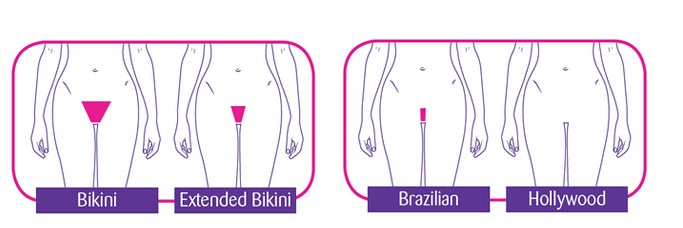
- Brazilian / Tranzillian
- Hollywood (all removed)
- Boxer (short/medium/long)
- Intimate preparation for surgical transition
We work safely, professionally and with full respect for your privacy.

Brazilian/Tranzilian = intimate front where you choose if you want to save a small part and between the buttocks. Hollywood = then you remove all intimate front and between the buttocks.
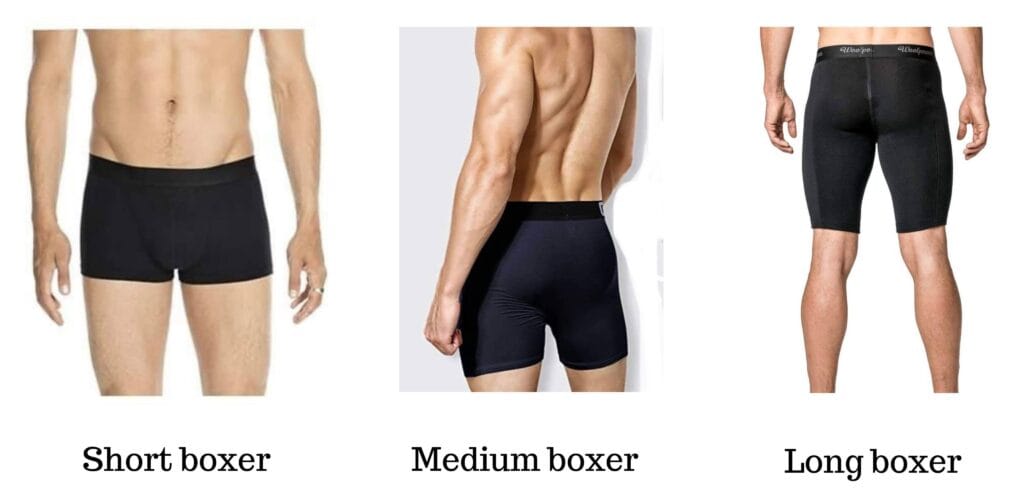
Short/Medium/Long boxer = we remove everything you want in this area.
INTIMATE HAIR REMOVAL BEFORE SURGICAL TRANSITION
In a male-to-female gender reassignment surgery (vaginoplasty), pubic hair is removed from the area to create a vulva, clitoris, and labia. It is important that this skin is free of hair to avoid problems inside the vagina, which can cause infections and discomfort.
In a vulva-to-penis (FTM/transman) gender reassignment surgery, the existing genitals are removed. Instead, a neopenis is created, a functional penis that is built from tissue from the clitoris and surrounding tissue. To prevent hair from growing into new structures and to be able to create a natural look and function, the pubic hair in the area is removed.
Hence the desire to remove hair before surgery. Most people first undergo laser treatment to permanently remove hair from the areas that will be used to create the new genitals. If there is hair that the laser has not removed, such as white, gray, or red hair or other stubborn hair, these can be removed with electrolysis/diathermy.
PILONIDAL CYST
Pilonidal cysts are a common but often painful condition that affects the area between the buttocks, near the tailbone. They occur when hairs grow inward or press into the skin, creating inflammation, which can lead to infection, abscess formation and in some cases require surgery. People with excessive hair growth in the area, a sedentary lifestyle or tight clothing are at increased risk of developing these cysts.
Undergoing laser treatment is not only an aesthetic investment, but can also be a medical preventive measure for those who have previously had or are at risk of getting pilonidal cysts.
BACK SHOULDERS NECK AXILLA CHEST TUMMY LEGS
Larger areas such as the back, arms or entire legs take a little more time to treat per session. We have time-based prices where we laser as much as possible during a certain time. There are some guidelines for how long it takes to laser different areas, but it is individual and depends on several factors. Primarily, it is how large the surface is. Moveo takes longer than AiR. The higher the strength, the longer it takes. Darker skin types take longer than lighter ones, etc. How sensitive you are also plays a role.

EARS NOSE BETWEEN EYEBROWS NIPPLES FINGERS TOES..
Yes, it is possible to remove hair here too. We cannot laser directly into the ears or nose, but we can remove hair on the outer ear, tragus, and the edges of the nose. Many people want to remove hair on the nose, beard, around the nipples, stomach string, elbows, knees, hands, fingers, feet and toes.
We treat everywhere except:
– Mucous membranes e.g. inside the nose
– 2cm from the eyes (between and above the eyebrows is fine)
BEARD GROWTH
For those of you who want to remove the entire beard growth, it may be good to know a few things. To begin with, it is much more difficult to remove beard growth than other areas. This depends on several things. Beard hairs are harder and thicker and grow deeper into the skin than other hairs. They also grow very densely and grow very quickly. It is not possible to laser remove the beard without it unfortunately being a little painful. During the treatment period, it often has a slightly patchy appearance.
When lasering beard growth, we recommend treatments at intervals of about 4 weeks. NOTE: Removing the entire beard growth if you have dark skin can be difficult and requires many treatments. Skin types 1-4 usually go very well.
The pictures below show before and during ongoing beard growth treatment, as there are often “small islands” of hair in certain places. These decrease as the hair removal process progresses.

HORMONES AND HAIR GROWTH
In gender-correcting treatments, these are adapted to the goals you want to achieve.
-Puberty inhibitors (GnRH analogues): Slow the development of secondary sex characteristics (voice, body shape, facial hair) that do not match the gender identity. The effect is reversible.
-Sex-contrasting hormones (Estrogen/Testosterone): The goal is to induce puberty that matches the perceived identity.
-Estrogen treatment (often with antiandrogens) to create feminine features, with reduced muscle mass, increased fat mass and breast development. Many people notice that the hair on their body decreases slightly and is perceived as thinner and softer after a longer period of hormone treatment.
-Testosterone treatment to create masculine features, with increased muscle mass, a deeper voice and facial hair. Many who take testosterone to get more masculine hair still want to avoid hair in selected areas. Of course, you can laser hair removal where you don’t want it while “growing” hair in other areas. It all comes down to how you want it.
Conditions such as PMOS and Hirsutism cause increased hair growth on the face, chest, back and thighs and can also be treated with hormones and medications.
Hair growth is affected by:
- estrogen
- testosterone
- antiandrogens
- pubertal changes
- genetic factors
We have extensive experience in treating hormonally controlled hair growth and adapt the technique to your needs.
Changes in body hair for those taking hormones and/or medications usually begin to be noticed after about 6 months of use and are greatest during the first 1-2 years. However, it is quite common for the body to continue to change for a longer period of time: for example, voice pitch, facial and body hair, muscle mass and distribution of subcutaneous fat can still change after 5-6 years.

You can read everything you want to know about laser hair removal here!
NOTE: Hair lasers do not work on hair with too little pigment, such as white, gray, and red. The hair must be darker than the skin.